More Than a Reactor
Powerplex is being designed as a complete energy system, not a standalone facility.
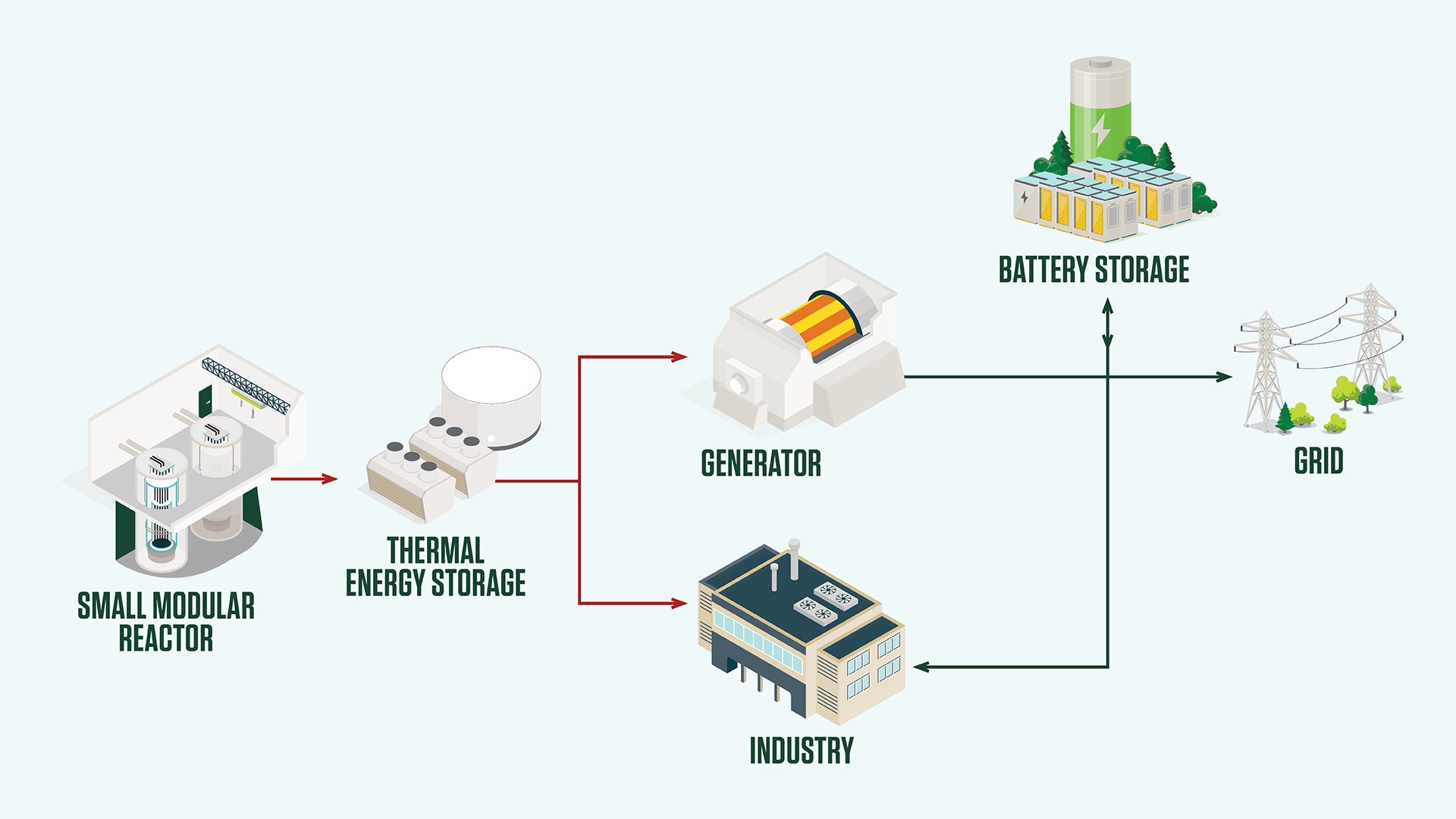
At its core would be a next-generation reactor that produces heat. That heat can be used to generate electricity, support research, serve industry, or be stored for later use.
Flexibility is what makes Powerplex different. Because the system can send energy down more than one path, it can adjust to changing demand without interrupting how the reactor runs. Instead of studying one technology in isolation, researchers and partners would be able to study how energy generation, storage, controls, and demand work together as one interconnected system.
A Connected Energy System
Powerplex would link several parts of the energy system in one place:
Nuclear Energy
A planned 10-megawatt nuclear facility would provide the steady heat source anchoring the system.
Electricity Generation
Heat from the facility could be converted into electricity for campus operations, research needs, and testing new applications.
Thermal Energy Storage
When the system produces more energy than is needed at the moment, the excess can be safely stored as heat and used later when demand rises or when researchers need to test different operating conditions.
Industrial Applications
Powerplex will allow researchers and partners to study how clean, reliable energy could support high-demand uses such as advanced manufacturing and critical infrastructure development.
Controls and Data
Sensors, software, and control systems will help researchers understand how the full system performs under real conditions, in real time.
What PowerPlex Will Enable
PowerPlex will be designed to answer questions that are too large, too interconnected, or too practical to study in a traditional lab.
Researchers will be able to test how nuclear energy interacts with different systems, inputs, and industrial processes, including how energy can be produced, stored, and delivered efficiently under realistic operating conditions.
Students will train on advanced energy systems similar to those being developed across the country, gaining experience that carries directly into industry.
Industry partners will have a place to safely test technologies at meaningful scale, shortening the distance between development and deployment.
These capabilities will make PowerPlex the place where Missouri’s next-generation energy economy will be built and tomorrow’s high-skilled workforce will be trained.
Get Involved With Powerplex
Powerplex brings together researchers, students, and industry leaders to advance real-world energy innovation. Explore opportunities to collaborate on research, gain hands-on learning experience, or build strategic partnerships that support next-generation energy systems.